Defensible Space in Placer County: The Simple Checklist Homeowners Should Follow
Wildfire season is not the time to “get around to it.” In the foothills, defensible space is one of the biggest things that helps a home survive a fire. The good news is it does not have to be complicated. You just need a clear plan, and you need to focus on the right areas.
What “defensible space” actually means
Defensible space is the buffer between your home and the wildland around it. The goal is to slow a fire down and reduce the amount of heat and embers reaching your structure. Most homes that burn do not get hit by a giant wall of flames first. They get lit from embers and radiant heat.
The simple 3-zone checklist
Think of your property in zones moving outward from the house.
Zone 0 (0–5 feet from the house)
This is the most important zone.
Remove dead leaves, pine needles, and debris
Keep this area as “non-burnable” as possible
Move wood piles away from the house
Trim back anything touching the structure (shrubs, branches, vines)
Watch mulch. If you use it, keep it away from the foundation
Zone 1 (5–30 feet)
This zone is about stopping fire from building intensity near your home.
Remove dead plants and ladder fuels (anything that can carry fire upward)
Keep grass cut short during dry season
Space shrubs out so they are not touching each other
Trim tree branches away from roofs and chimneys
Keep tree canopies separated when possible
Zone 2 (30–100 feet, or to your property line)
This zone is about reducing fuel and slowing the spread.
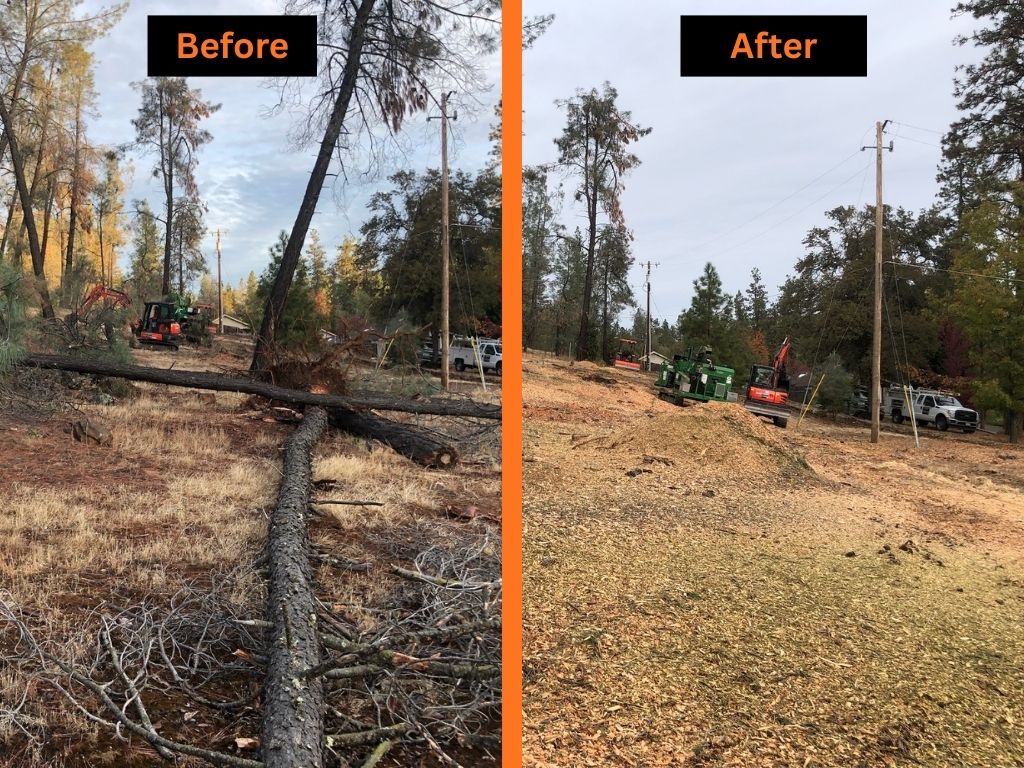
Thin dense brush and small trees
Remove dead standing trees and downed limbs
Create separation between groups of vegetation
Keep access paths and driveways clear for emergency vehicles
What inspectors and fire crews usually notice fast
If you want a quick reality check, stand in the street and look at your home like a firefighter would. The biggest red flags are:
Brush packed tight against the home
Branches hanging over the roof
Leaves and needles in gutters
Wood piles next to structures
Overgrown driveways that block access
When you should bring in a pro
If you have steep terrain, thick brush, tall ladder fuels, or trees close to structures, it is worth getting help. These projects can become dangerous quickly, and they take the right equipment to do safely and cleanly.
Want a quick estimate?
If you’re in Placer County or Nevada County and want someone to walk the property and give you a straight answer, contact Blackmun Land Management. We’ll let you know what needs to be cleared, what can stay, and what will make the biggest difference.
Call or request an estimate here: blackmunlandmanagement.com/contact-us